
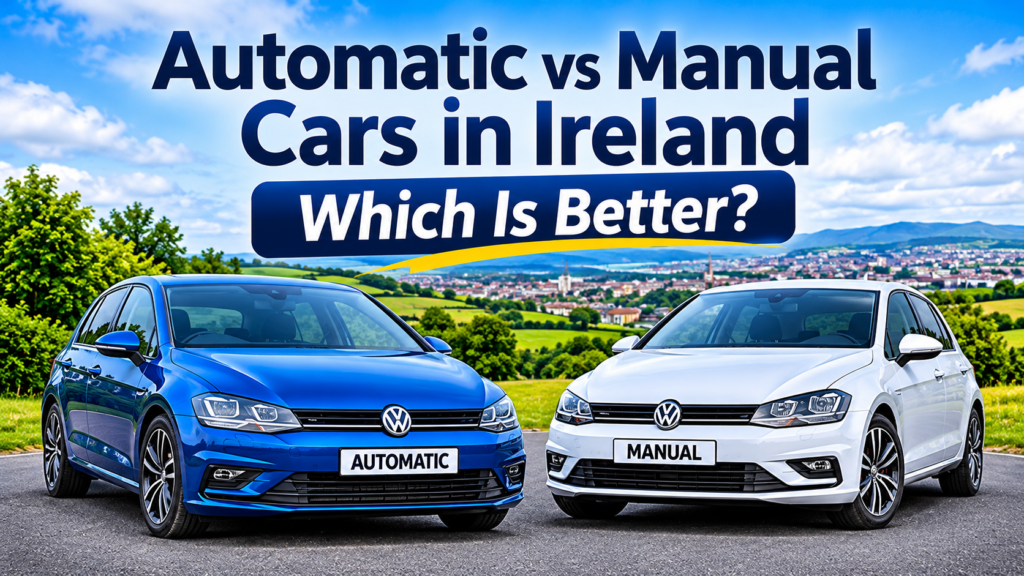
Choosing between an automatic and a manual car is an important decision when buying your next vehicle. Both options have advantages, but the right choice depends on your driving habits, budget and the type of journeys you make.
When comparing automatic vs manual cars in Ireland, it is worth considering more than just the gearbox. Daily commuting, busy city traffic, fuel consumption, maintenance costs and driving comfort can all influence your decision.
Some drivers prefer the simplicity of an automatic, while others enjoy the control and traditional driving experience of a manual. In this guide, we compare both options to help you understand their differences, running costs and suitability for Irish roads.
Automatic vs Manual Cars in Ireland: The Quick Answer
Automatic cars are generally more convenient for drivers who regularly travel through busy towns and stop-start traffic. They remove the need to operate a clutch or change gears manually, making everyday driving easier.
Manual cars can be attractive to buyers looking for a lower purchase price, greater control and a traditional driving experience. However, modern automatic transmissions have become increasingly efficient and can offer fuel economy comparable to manual alternatives. Ultimately, the best choice depends on your budget, driving conditions and personal preferences.
1. Understanding the Difference Between Automatic and Manual Cars
Before comparing costs and performance, it helps to understand how each transmission works.
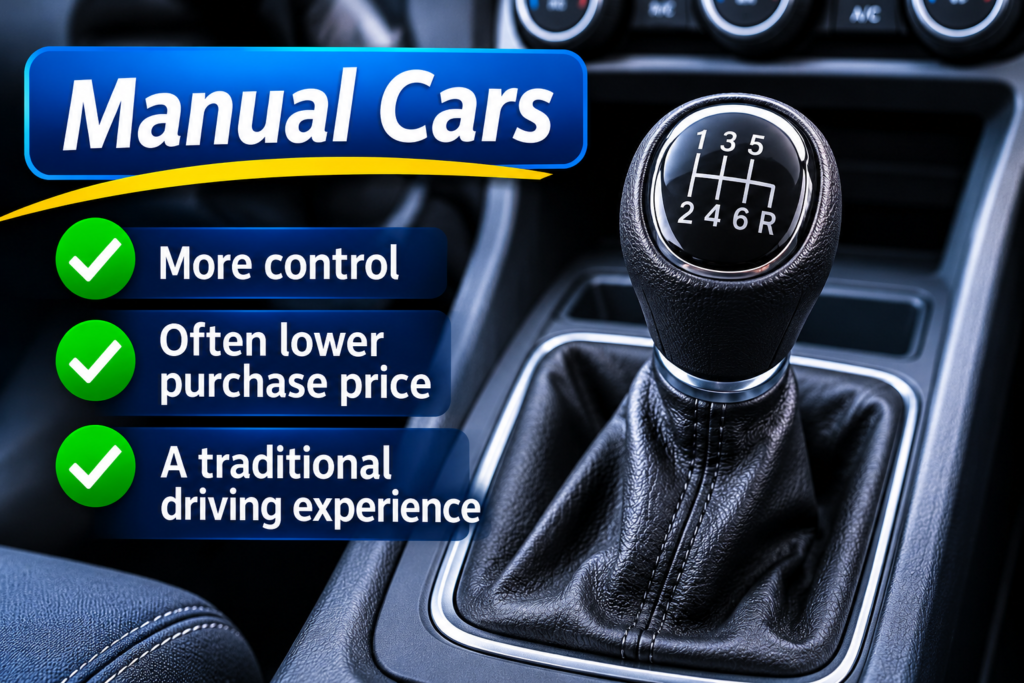
How does a manual car work?
A manual car requires the driver to operate a clutch pedal and select gears using a gear stick. You must change gears depending on your speed, road conditions and engine requirements.
For example, when moving away from a junction, you select first gear, gradually release the clutch and accelerate. As your speed increases, you change into higher gears. Many experienced drivers enjoy this level of control, particularly when driving on open roads.
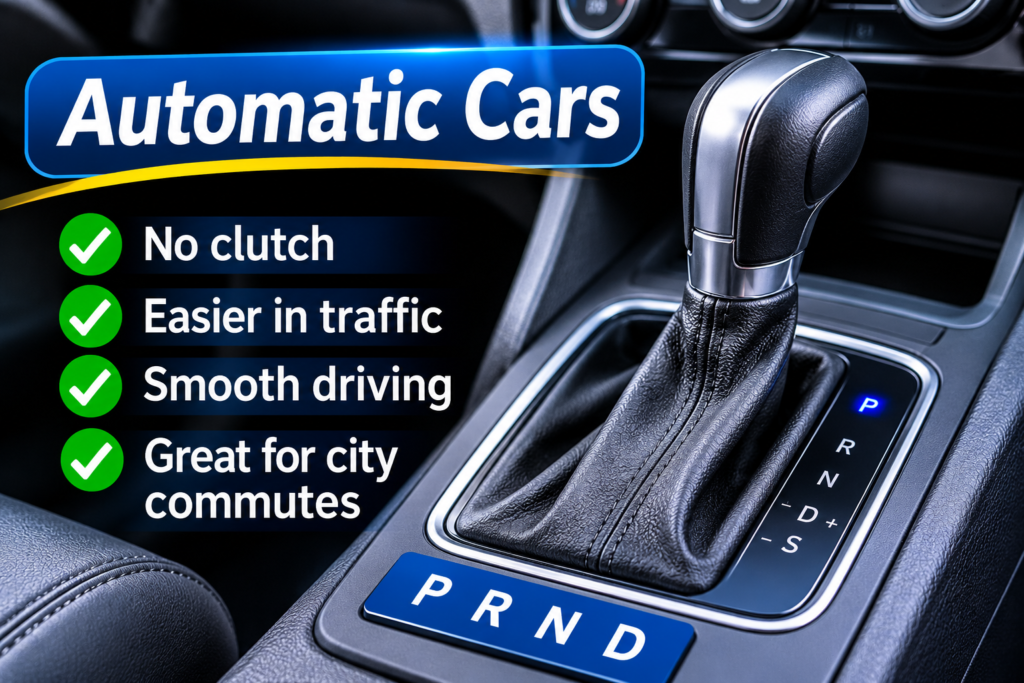
How does an automatic car work?
An automatic car changes gears without requiring the driver to operate a clutch pedal or select each gear manually. You simply select Drive, accelerate and brake as needed. The transmission manages gear changes according to your speed and driving conditions.
Modern automatic vehicles may use traditional torque-converter gearboxes, dual-clutch systems or continuously variable transmissions (CVT). Each system operates differently, but the main advantage is convenience.
2. Which Is Better for Driving in Ireland?
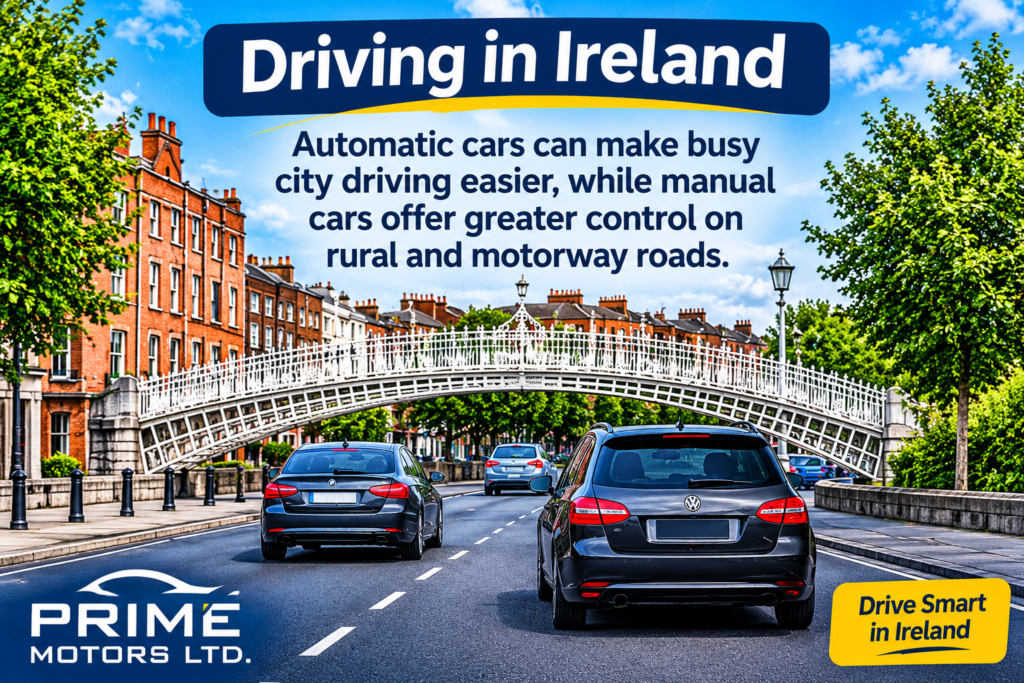
Driving conditions in Ireland vary considerably. You might travel through busy Dublin streets during the week, use motorways for longer journeys or navigate narrow country roads at weekends.
Your usual driving environment should influence your decision.
Automatic cars for city driving
Automatic cars are particularly convenient in busy urban areas. Drivers travelling through Dublin, Cork, Galway and other busy towns regularly encounter traffic lights, queues, roundabouts and stop-start traffic.
With an automatic transmission, you do not need to repeatedly press the clutch or change gears. This can reduce driving fatigue, particularly during longer commutes. Automatic cars can also make parking and maneuvering easier for drivers who prefer a simpler driving experience.
Manual cars for rural and motorway driving
Manual cars remain a practical choice for drivers who regularly travel outside urban areas. Some drivers prefer having direct control over gear selection when climbing hills, overtaking or travelling along winding rural roads. However, both transmission types can perform comfortably on Irish motorways and regional roads when properly maintained.
Our advice: If most of your journeys involve urban commuting and heavy traffic, an automatic may be the more comfortable option. If you enjoy changing gears and regularly travel on quieter roads, a manual could suit your needs.
3. Automatic vs Manual Fuel Economy: Which Saves More?
Fuel economy is one of the biggest considerations when purchasing a used car. Traditionally, manual cars were often more economical than automatic vehicles. Older automatic transmissions sometimes used more fuel because of their design and limited gear ratios.
However, modern automatic technology has changed this comparison. Many newer automatic transmissions are designed to improve efficiency through smoother gear changes and optimised engine performance. Some can match or even outperform equivalent manual models.
Your actual fuel consumption depends on several factors:
Engine size and fuel type.
Vehicle weight and aerodynamics.
Transmission design and condition.
Driving style and acceleration habits.
Traffic conditions and journey length.
Tyre pressure and vehicle maintenance.
For example, a small petrol automatic may be a sensible choice for regular town driving, while a diesel manual might suit someone who frequently covers longer motorway distances. Rather than assuming one transmission is always cheaper, compare the official fuel consumption figures for the exact make, model, engine and year. The Irish Department of Transport explains how vehicle fuel consumption, CO2 emissions and motor tax information can be compared using vehicle efficiency labels.
4. Maintenance and Repair Costs
Another important consideration is the long-term cost of owning a vehicle.
Manual transmission maintenance
Manual cars have relatively straightforward transmission systems, although clutch components experience wear over time. Potential maintenance expenses include:
Clutch replacement.
Clutch master or slave cylinder repairs.
Gearbox oil changes.
Gear linkage repairs.
Frequent stop-start driving and poor clutch habits can contribute to premature clutch wear.
Automatic transmission maintenance
Automatic gearboxes provide convenience but can be more complex mechanically. Depending on the transmission type, maintenance may include:
Gearbox fluid servicing.
Transmission filter replacement.
Software or electronic system diagnostics.
Repairs to transmission components.
Not every automatic gearbox has the same servicing requirements. Some manufacturers specify particular fluid-change intervals, while others use different maintenance schedules. When purchasing a used automatic car, always check its service history and look for evidence of recommended gearbox maintenance. During a test drive, pay attention to unusual noises, delayed engagement, slipping or jerky gear changes. Any concerns should be investigated by a qualified mechanic.
Important: A well-maintained automatic can be a better purchase than a poorly maintained manual. Vehicle condition and service history matter more than transmission type alone.
5. Purchase Price and Resale Value in Ireland
Purchase price is another factor worth considering when comparing automatic cars Ireland and manual alternatives. In some used-car categories, automatic models can attract higher asking prices because buyers value their convenience and driving comfort. However, the difference varies depending on the vehicle’s age, mileage, engine, specification and overall condition.
Manual vehicles may offer better value for buyers working with a limited budget, particularly when comparing similar models. Resale value also depends on market demand. Automatic transmissions are increasingly common in modern vehicles, particularly hybrids and electric cars. Before purchasing, compare similar vehicles across Irish dealerships and online marketplaces. Look at their mileage, service records, specification and condition rather than comparing prices alone.
6. Which Transmission Is Better for First-Time Buyers?
First-time buyers should consider their driving experience, confidence and insurance budget. An automatic can be easier to manage because there is no clutch control or manual gear changing. This can help drivers concentrate on road awareness, positioning and traffic conditions.
Manual cars offer greater flexibility for drivers who want to operate both transmission types. There is also an important Irish driving license consideration. According to the Road Safety Authority (RSA), passing your driving test in an automatic vehicle restricts your license to automatic vehicles. Passing in a manual vehicle allows you to drive both manual and automatic vehicles in that category. Therefore, consider your future driving requirements before choosing which type of vehicle to learn in.
7. What Should You Check Before Buying a Used Automatic or Manual Car?
Regardless of your preferred transmission, never purchase a used car based on appearance alone.
Use this practical checklist before making your decision:
For automatic cars:
Check that the gearbox engages Drive and Reverse smoothly.
Look for jerking, slipping or delayed gear changes.
Review gearbox servicing requirements.
Test the vehicle under different driving conditions.
Check the complete service history.
For manual cars:
Check for clutch slipping or unusual noises.
Ensure all gears engage smoothly.
Test the clutch biting point.
Listen for gearbox noises.
Check for evidence of regular servicing.
For both types:
Review the vehicle’s mileage and service history.
Check its NCT status and previous records.
Inspect the tyres, brakes and suspension.
Confirm the vehicle’s ownership and history.
Arrange a professional inspection if necessary.
Taking time to inspect a vehicle can help you avoid unexpected expenses and make a more informed purchase.
Frequently Asked Questions (FAQs)

1. Are automatic cars more expensive than manual cars in Ireland?
Not always, Automatic vehicles can have higher asking prices in certain categories, but the difference depends on the model, age, mileage and condition. Compare similar vehicles before deciding.
2. Do automatic cars use more fuel than manual cars?
Not necessarily, Older automatics were often less economical, but modern automatic transmissions can offer similar or better fuel efficiency than equivalent manual models.
3. Which is better for driving in Dublin traffic?
Automatic cars are generally more convenient for Dublin’s stop-start traffic because drivers do not need to operate a clutch or change gears constantly.
4. Are manual cars cheaper to maintain?
Manual transmissions can have simpler mechanical systems, but clutch replacements and other repairs can still be expensive. Automatic gearbox repairs can also cost more depending on the fault. Maintenance history is essential for both.
5. Can I drive a manual car with an automatic driving licence in Ireland?
No, if you pass your Irish driving test in an automatic vehicle, your license is restricted to automatic vehicles. You must pass a manual driving test to remove that restriction. The RSA provides further guidance on this requirement.
Conclusion: Automatic or Manual – Which Should You Buy?
When comparing automatic vs manual cars in Ireland, there is no single answer that suits every driver. If you regularly commute through busy towns, prefer convenience and want a relaxed driving experience, an automatic car could be the right investment. If you enjoy traditional driving, prefer greater control and want to explore potentially lower-priced options, a manual vehicle may be more suitable.
Whichever transmission you choose, prioritize vehicle condition, service history, fuel economy and overall value. At Prime Motors Ltd., we understand that choosing the right car is about finding a vehicle that suits your everyday needs and budget. Visit us in Clonee, Co. Meath, Ireland, to explore our available vehicles and find your next car.
Looking for your next automatic or manual car?
Browse our latest stock at or contact Prime Motors Ltd. today to discuss your requirements.